Erdem Genç, Turkey’s Most Outstanding Young Person
The interview published in the newspaper Milliyet on 19.12.2015:
Work 8 hours, sleep 8 hours, enjoy yourself for 8 hours. Erdem Genç, recently named Turkey’s most successful young person: “I have always set myself goals. And once I reach those goals, new ones… But I don’t want to be a man who can never lift his head from his work. If you work 8 hours and sleep 8 hours, enjoy yourself for the remaining 8.”
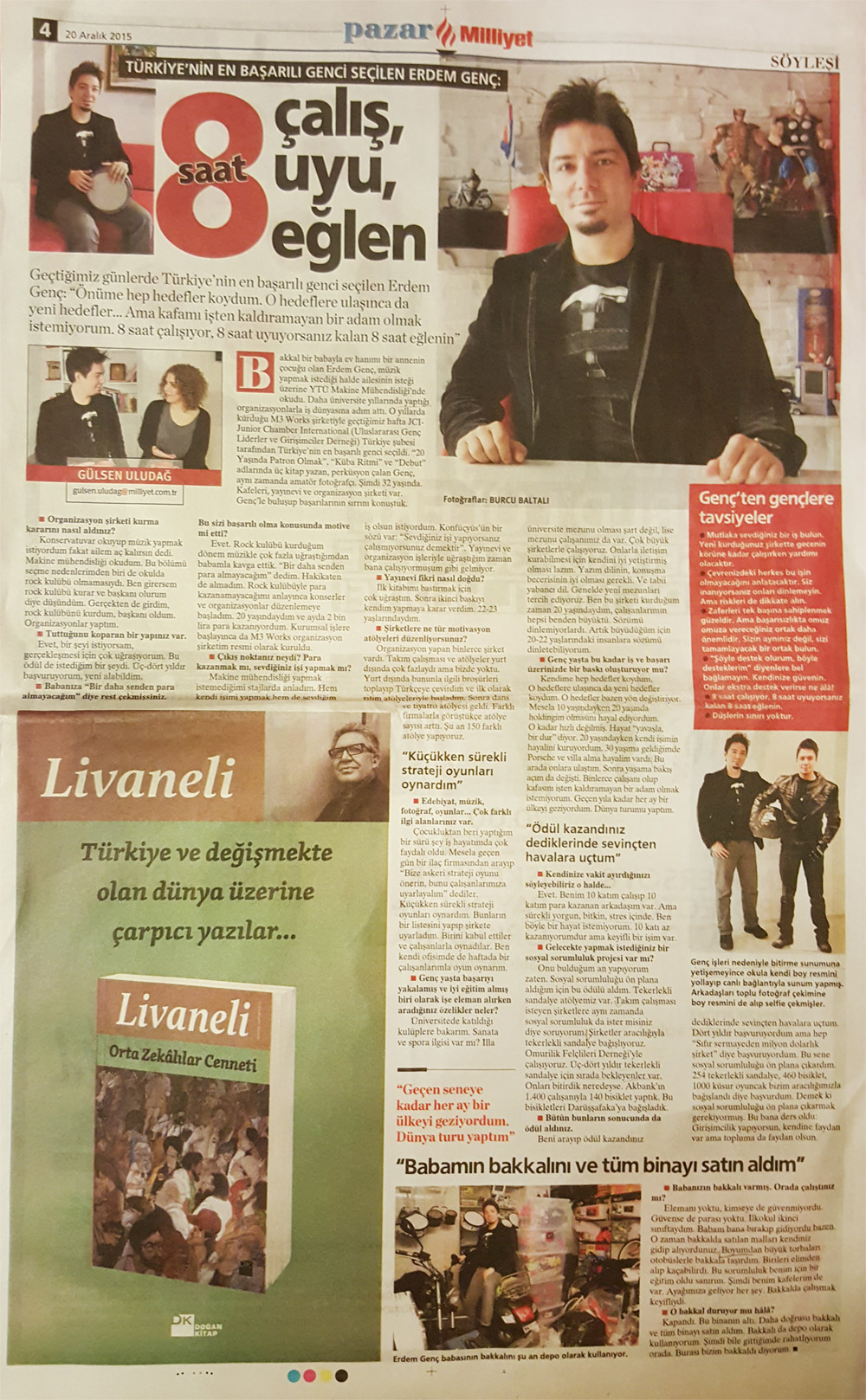
The child of a grocer father and a housewife mother, Erdem Genç wanted to make music but, at his family’s wish, studied Mechanical Engineering at YTÜ. He stepped into the business world while still at university, through the events he organised. With M3 Works, the company he founded in those years, he was named Turkey’s most successful young person last week by the Turkish branch of JCI – Junior Chamber International (the international association of young leaders and entrepreneurs). The author of three books, “Boss at 20”, “Cuban Rhythm” and “Debut”, and a percussionist, Genç is also an amateur photographer. He is now 32. He owns cafés, a publishing house and an events company. We met Genç and talked about the secret of his success.
How did you decide to set up an events company? I wanted to study at the conservatoire and make music, but my family said, “You’ll starve.” So I studied mechanical engineering. One of the reasons I chose that department was that the university had no rock club. I thought, if I get in, I’ll found a rock club and become its president. And that is exactly what happened: I got in, founded the rock club and became its president. I organised events. You are someone who gets what he goes after. Yes, if I want something, I work very hard to make it happen. This award was something I wanted, too. I have been applying for three or four years and have only just won it. You apparently gave your father an ultimatum: “I will never take money from you again.” Did that motivate you to succeed? Yes. At the time I founded the rock club I was so wrapped up in music that my father and I had a row. I said, “I will never take money from you again.” And I really didn’t. When I realised I couldn’t make money from the rock club, I began organising concerts and events. I was 20 years old and earning 2,000 lira a month. When I moved on to corporate work, my events company M3 Works was officially founded. What was your starting point? Making money, or doing work you love? I realised during my internships that I didn’t want to be a mechanical engineer. I wanted both to run my own business and for it to be work I loved. There is a saying of Confucius: “If you do the work you love, you are not working at all.” When I am busy with the publishing house and the events business, it doesn’t feel like work to me. How did the idea of a publishing house come about? I struggled a great deal to get my first book published. Then I decided to do the second printing myself. I was 22 or 23. What kind of motivation workshops do you run for companies? There were thousands of companies organising events. Team-building and workshops were very common abroad, but we had nothing of the kind here. I collected brochures about them abroad, translated them into Turkish and started out with rhythm workshops. Then came the dance and theatre workshops. The more companies I met, the more workshops we added. We now run 150 different workshops.
“As a child I was always playing strategy games”
Literature, music, photography, games… You have very varied interests. A whole host of things I have done since childhood have proved very useful in my working life. The other day, for instance, a pharmaceutical company rang and said, “Suggest a military strategy game for us, and let’s adapt it to our work.” As a child I was always playing strategy games. I drew up a list of them and adapted them for the company. They accepted one and played it with their employees. In my own office, too, I play games with my staff once a week.
As someone who found success at a young age and had a good education, what qualities do you look for when hiring? I look at the clubs they joined at university. Are they interested in the arts and sport? A university degree isn’t essential; we have employees who left school after high school. We work with very large companies. To be able to communicate with them, a person needs to have developed themselves well. Their writing and speaking skills need to be good. And, of course, a foreign language. We generally prefer recent graduates. When I founded this company I was 20, and all my employees were older than me. They wouldn’t listen to me. Now that I am older, I can get people of 20 to 22 to listen to me. Does so much work and success at a young age put pressure on you? I have always set myself goals. And once I reached those goals, I set new ones. Sometimes those goals change direction. When I was 10, for example, I dreamed of having a holding company by the age of 20. It turned out things don’t move that fast. Life says, “Slow down, stop a moment.” At 20 I was dreaming of having my own business. My dream for when I turned 30 was to buy a Porsche and a villa. I have achieved those, by the way. Then my outlook on life changed as well. I don’t want to be a man with thousands of employees who can never lift his head from his work. Until last year I was visiting a different country every month. I have done my world tour.
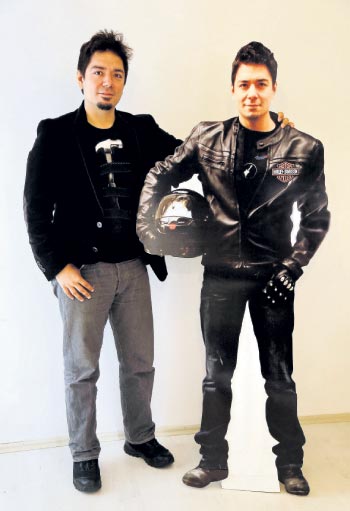
“When they told me I had won the award, I was over the moon” So we can say you make time for yourself… Yes. I have a friend who works ten times as hard as I do and earns ten times as much. But he is constantly tired, worn out and stressed. I don’t want a life like that. I may earn ten times less, but I have an enjoyable job. Is there a social responsibility project you would like to do in the future? The moment I find one, I do it. I won this award because I put social responsibility first. We have a wheelchair workshop. I ask companies that want team-building whether they would like some social responsibility with it as well. Through those companies we donate wheelchairs. We work with the Omurilik Felçlileri Derneği (the Spinal Cord Paralytics Association). There are people who have been waiting three or four years for a wheelchair. We have very nearly cleared that list. With 1,400 Akbank employees we built 140 bicycles. We donated those bicycles to Darüşşafaka. And as a result of all this, you won an award. When they rang and told me I had won the award, I was over the moon. I had been applying for four years, but always as “a million-dollar company from zero capital”. This year I put social responsibility to the fore. I applied on the basis that 254 wheelchairs, 460 bicycles and a thousand-odd toys had been donated through us. Evidently that was what it took. It taught me a lesson: if you are an entrepreneur, you are of benefit to yourself, but be of benefit to society too. When work kept Genç from attending his graduation presentation, he sent a life-size cut-out of himself to the university and gave the presentation over a live link. His friends brought the cut-out into the group photo shoot and took a selfie with it.
“I bought my father’s grocery shop and the whole building”
Your father had a grocery shop, I gather. Did you work there? He had no staff, and he trusted no one. Even if he had trusted someone, he had no money. I was in the second year of primary school. Sometimes my father would leave me in charge and go off. In those days you had to go and fetch the goods for the shop yourself. I used to carry big bags to the shop on buses, slung round my neck. Someone could have snatched them from me and run off. I think that responsibility was an education for me. Now I have cafés of my own. Everything is delivered to our door. Working in the grocery shop was fun.
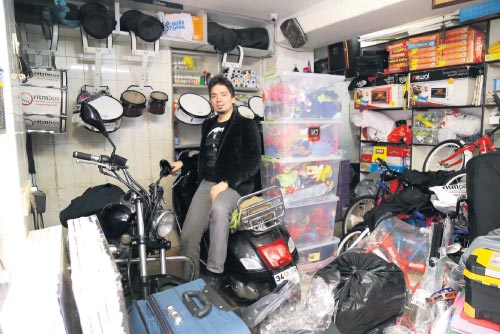
Is that grocery shop still there? It closed. It is the ground floor of this building. Or rather, I bought the grocery shop and the whole building. I use the shop as a storeroom. Even now, when I go there, I feel at ease. I say, “This used to be our shop.”
Erdem Genç now uses his father’s grocery shop as a storeroom.
Advice from Genç to the young:
Dreams have no limits.
When work kept Genç from attending his graduation presentation, he sent a life-size cut-out of himself to the university and gave the presentation over a live link. His friends brought the cut-out into the group photo shoot and took a selfie with it.